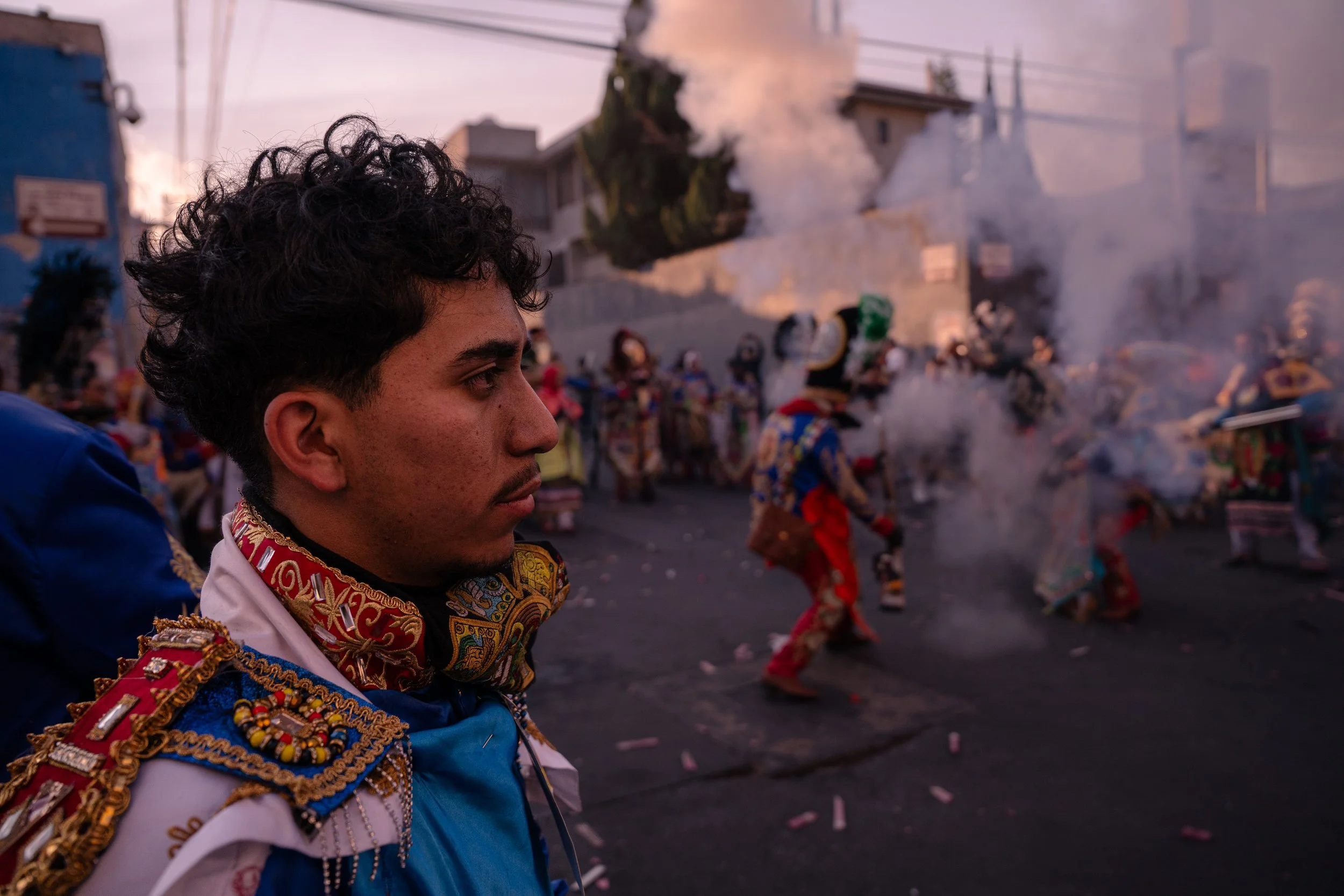
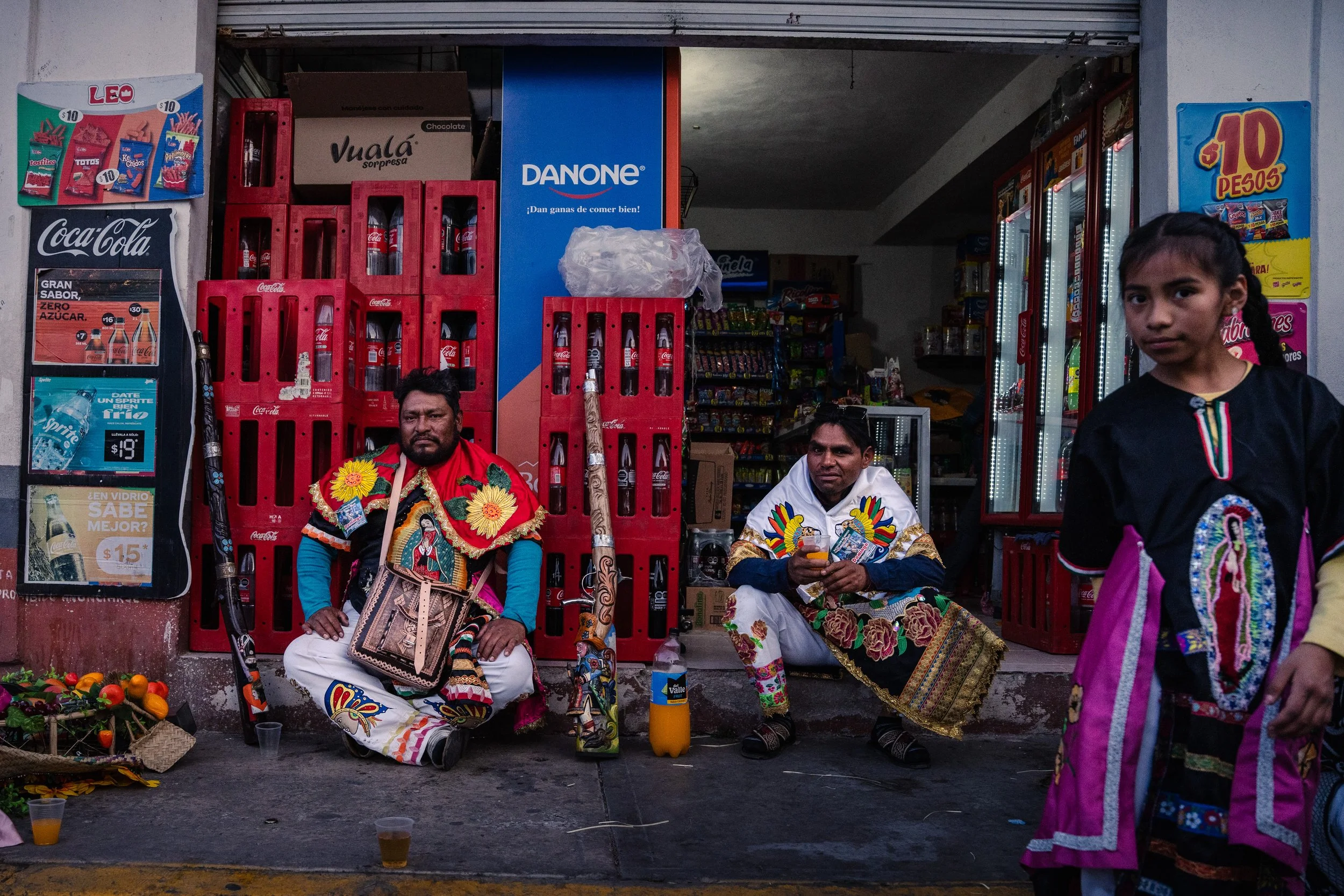
Four Days of Gunfire: carnaval huejotzingo
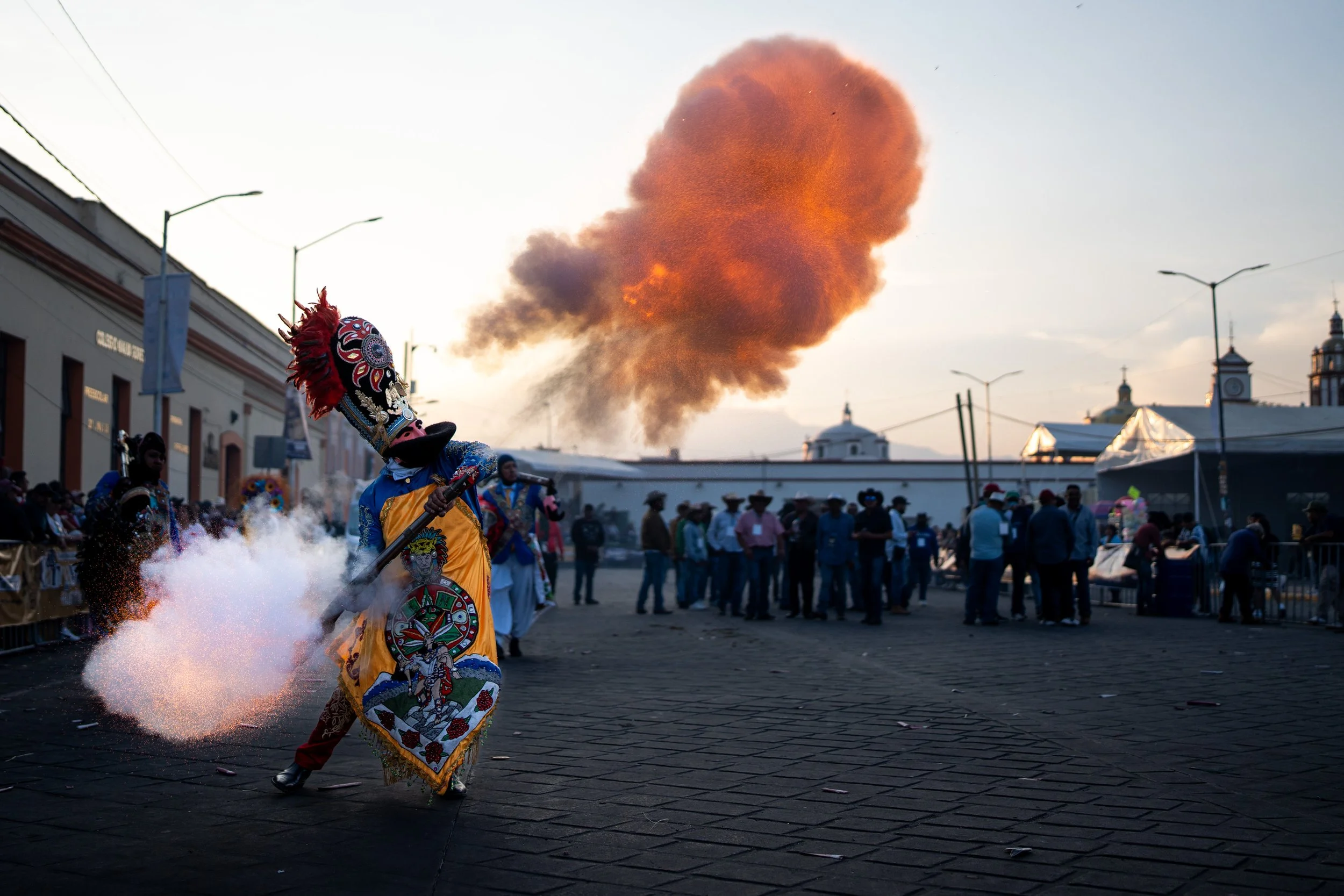
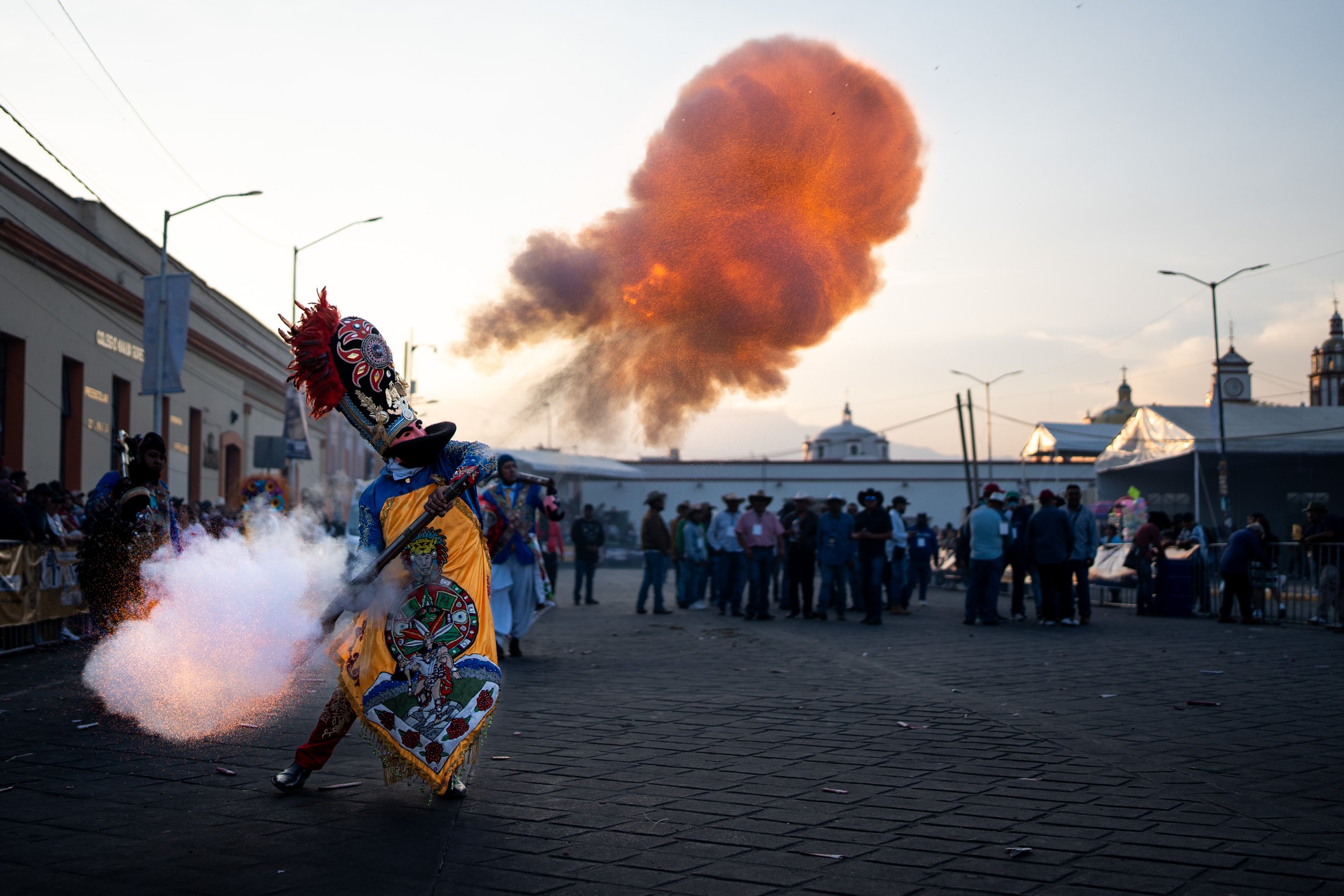
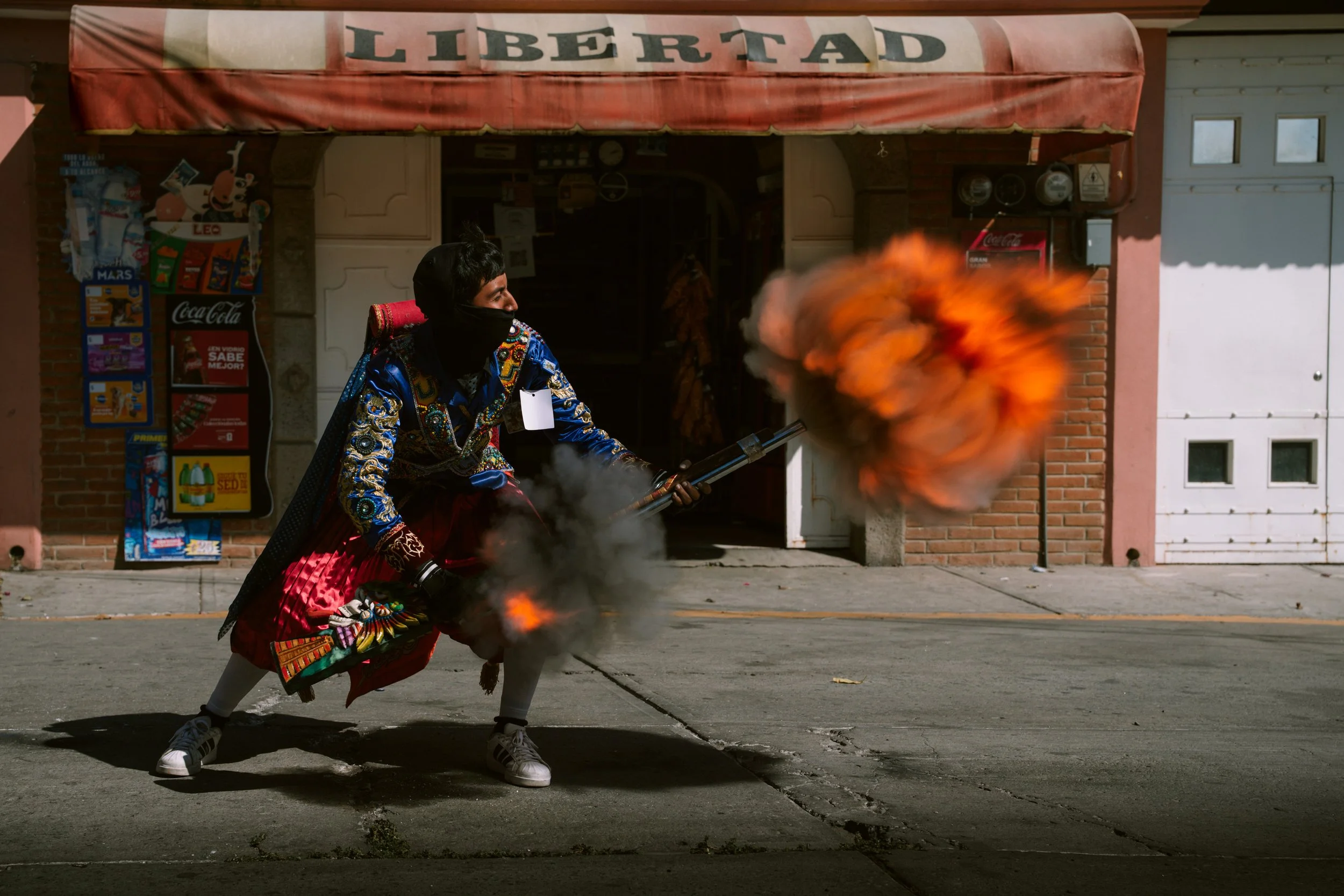
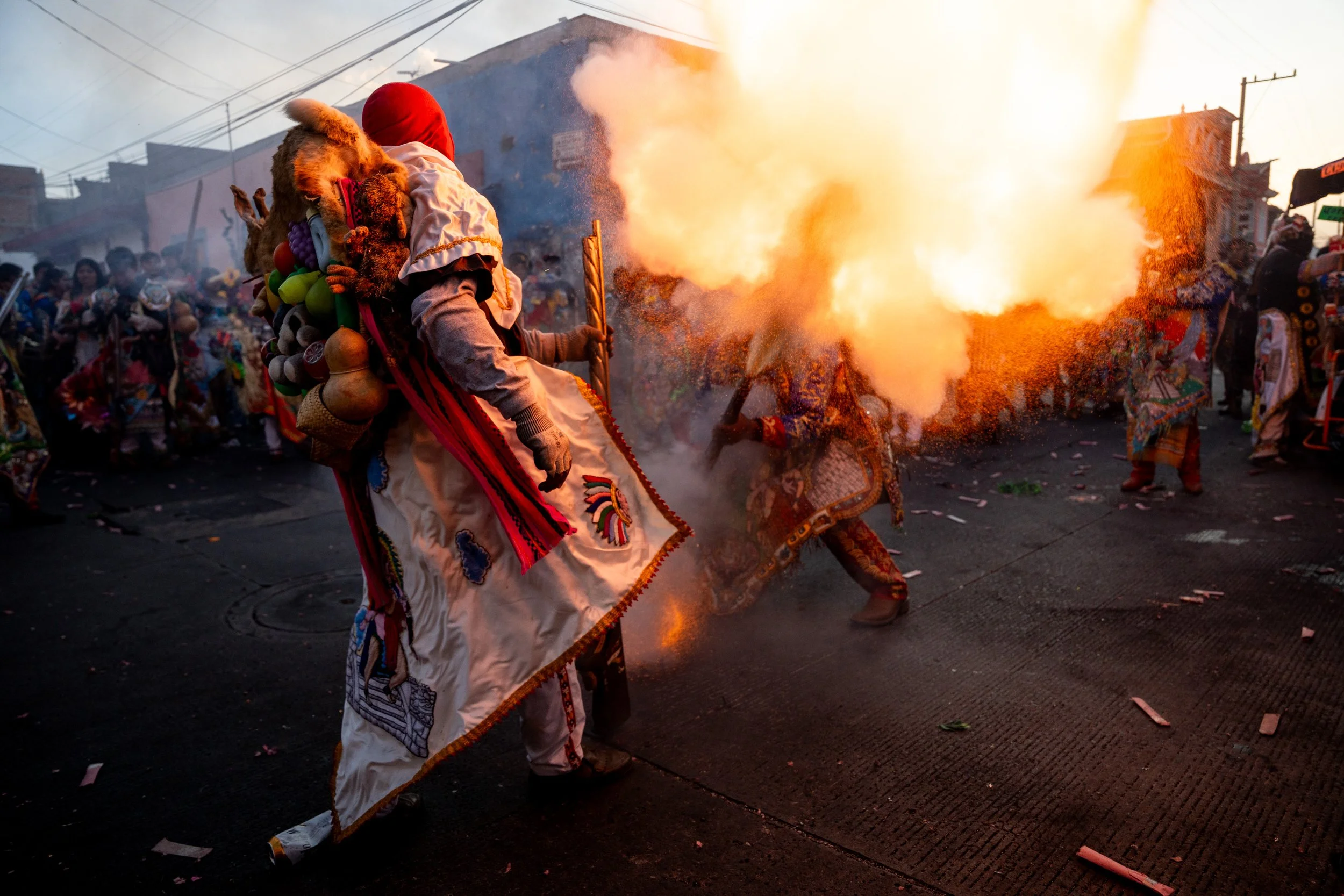
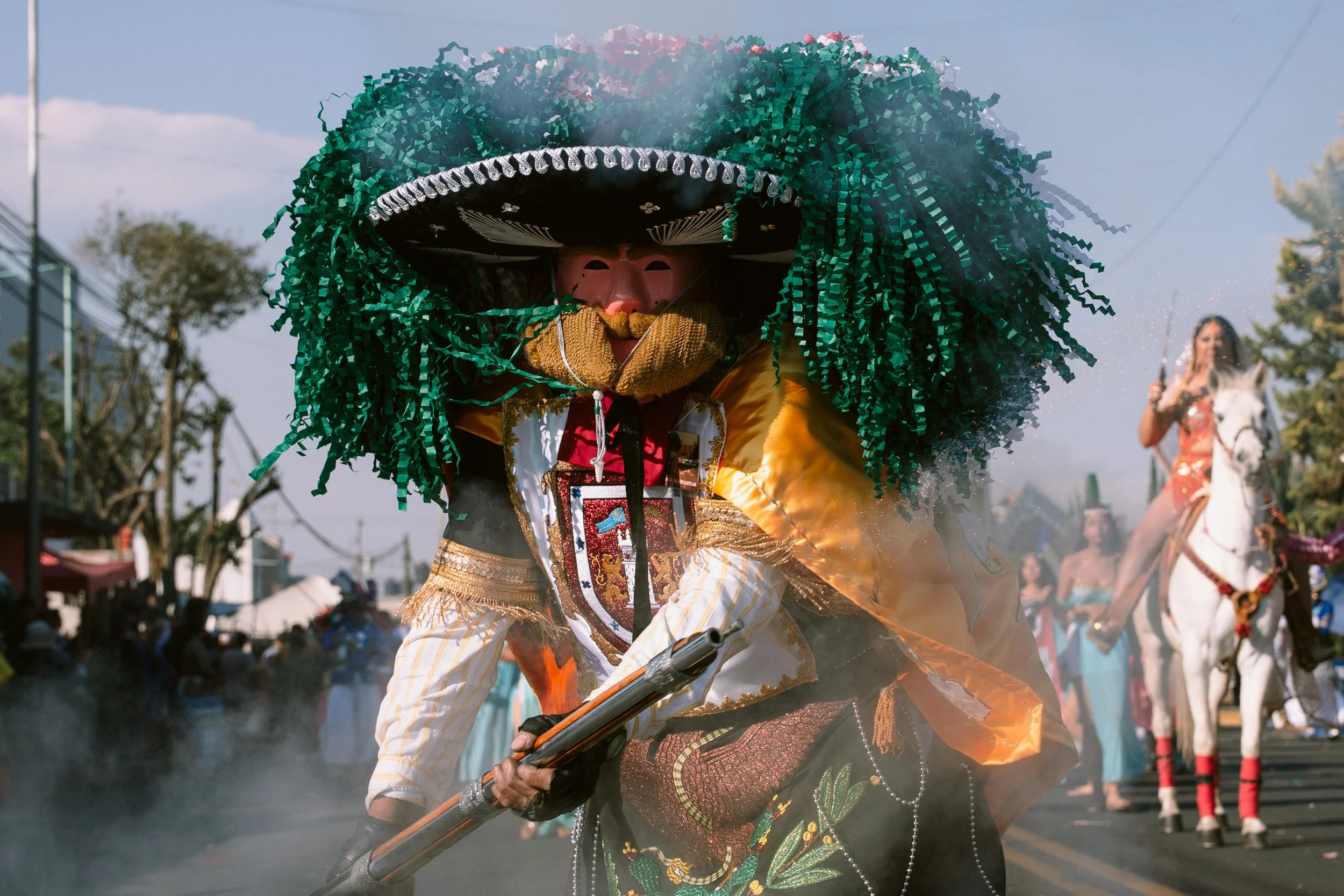
A “Turco” dancer firing their musket directly into the air. Shot on the Sony A7CII with the 35mm f/1.4 GM.
mexico’s most explosive party!
When you think of Carnaval, you might picture samba-fuelled parades in Brazil with floats, dancing and caipirinhas, or perhaps Venice with its gold and silver masks and ornate costumes. What you probably do not imagine is gunpowder, muskets, Indigenous dress and the crack of explosions echoing through the streets of Mexico.
But maybe you should.
It shouldn’t come as a surprise that a festival so associated with loud blasts and gunpowder sits at the foothills of some of the continent’s most active volcanoes. Each February, the streets of Huejotzingo, a small town in northern Puebla, erupt with dance, laughter, and tradition in a Carnaval unlike anywhere else.
a festival forged in gunpowder?
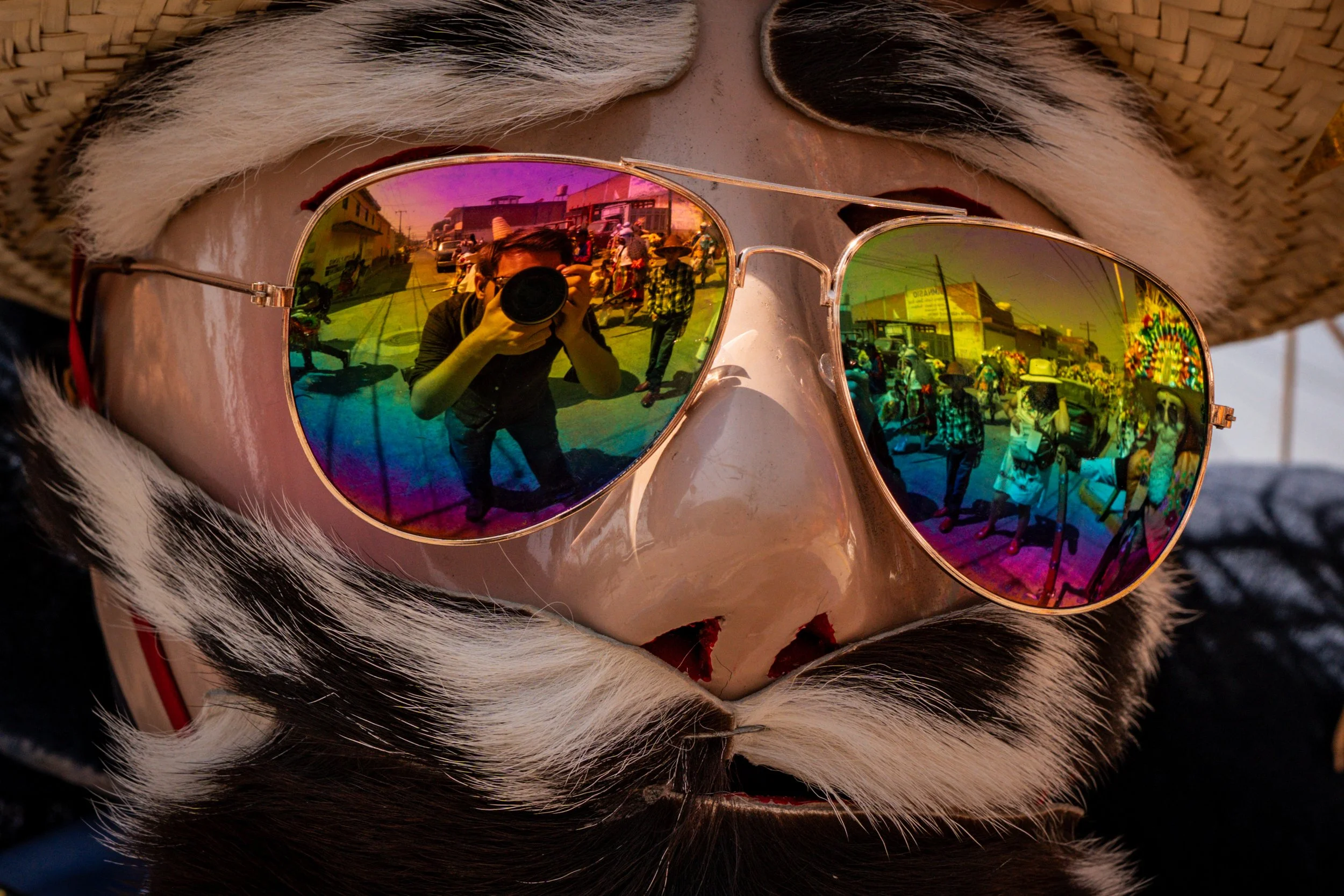
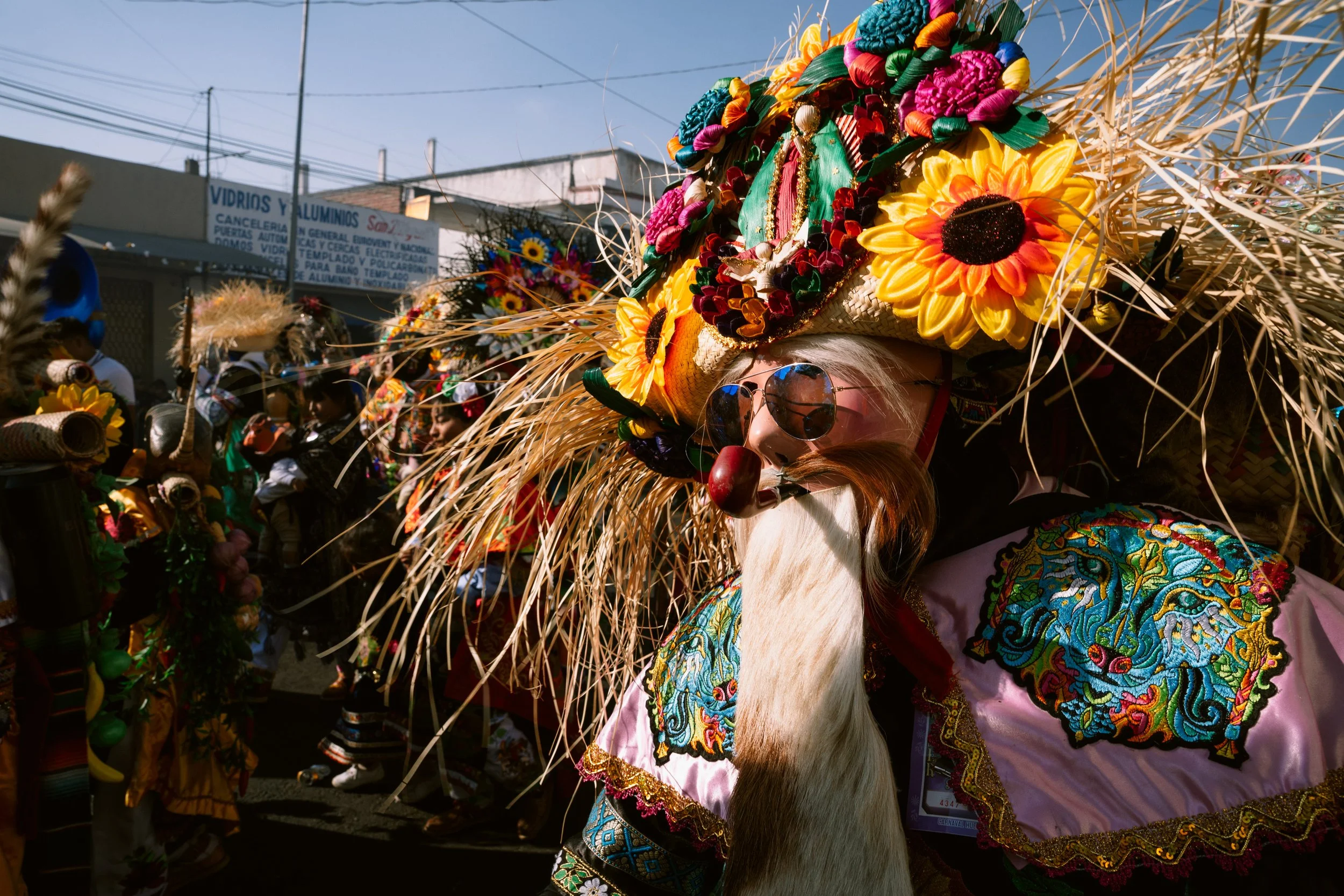
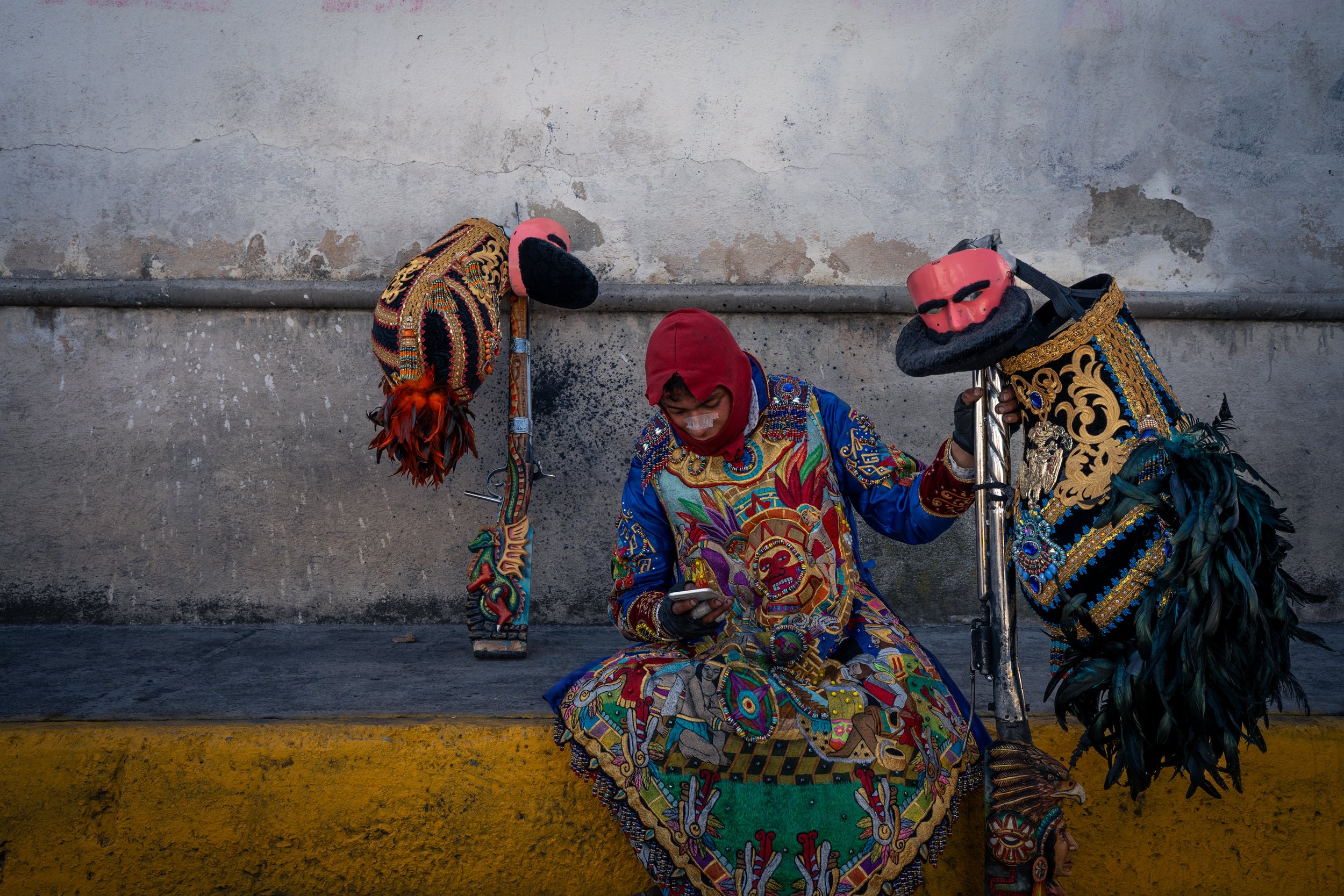
Many of the dancers equip their already arresting masks with aviators. Shot on the Sony A7CII with the 35mm f/1.4 GM
Carnaval has existed in Mexico for centuries, brought over the Spanish along with extravagant dress and fancy masks. But the idea of Carnaval here in Huejotzingo started to change sometime after the Battle of Puebla in 1862, when French troops, under the command of Charles de Lorencez, repeatedly failed to storm the mountain forts overlooking the small city of Puebla. This historic event is one of the most celebrated milestones in Mexico’s history, a time where the Mexican government worked in unison with the local Indigenous communities to push back against a common enemy.
And from this collision of French uniforms, Spanish-Mexican celebration, and Indigenous imagery a new tradition started to take shape. Carnaval dance troupes turned into historical battalions that reenacted elements of the Battle of Puebla. There are four core dance troupes one can see in Carnaval de Huejotzingo.
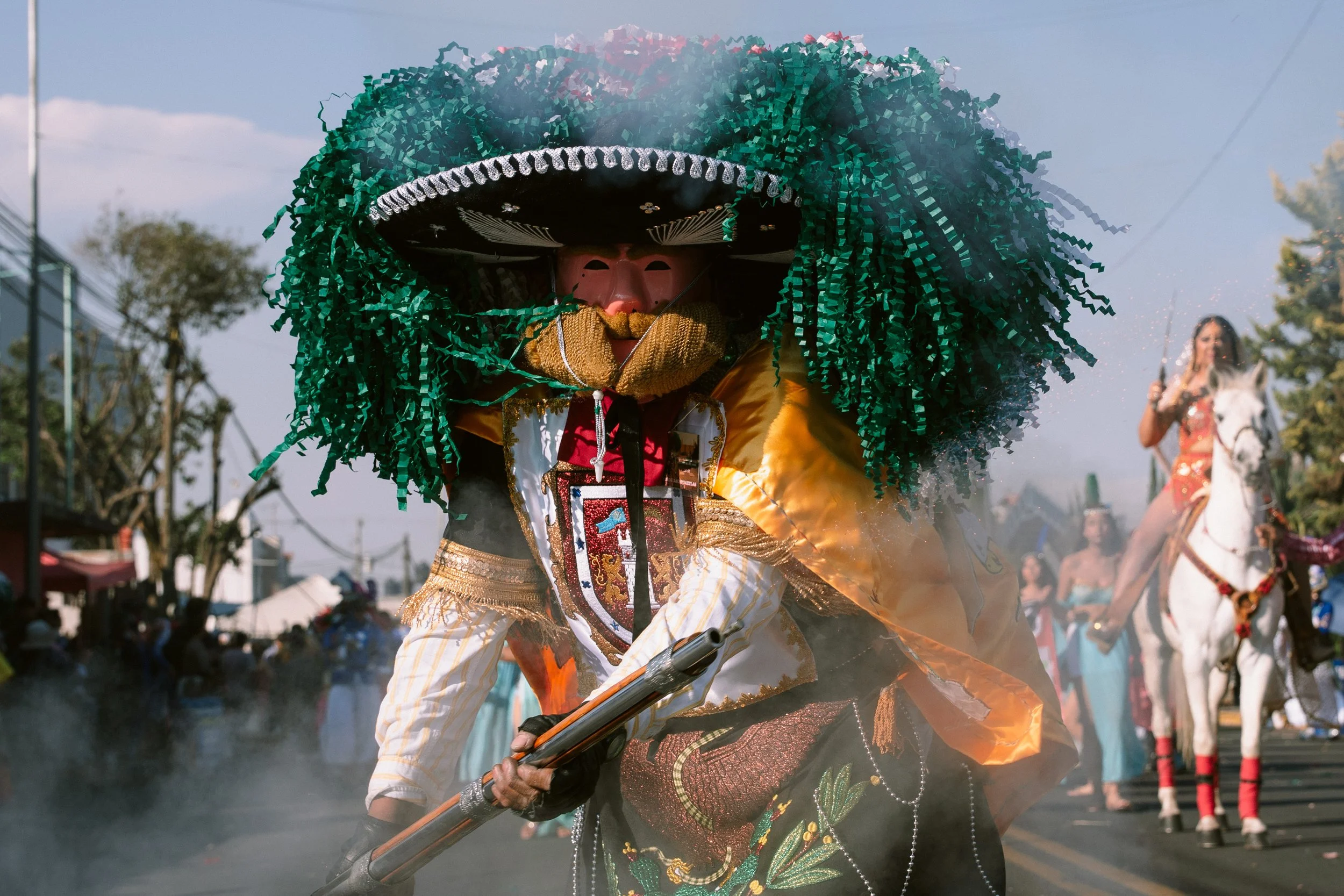
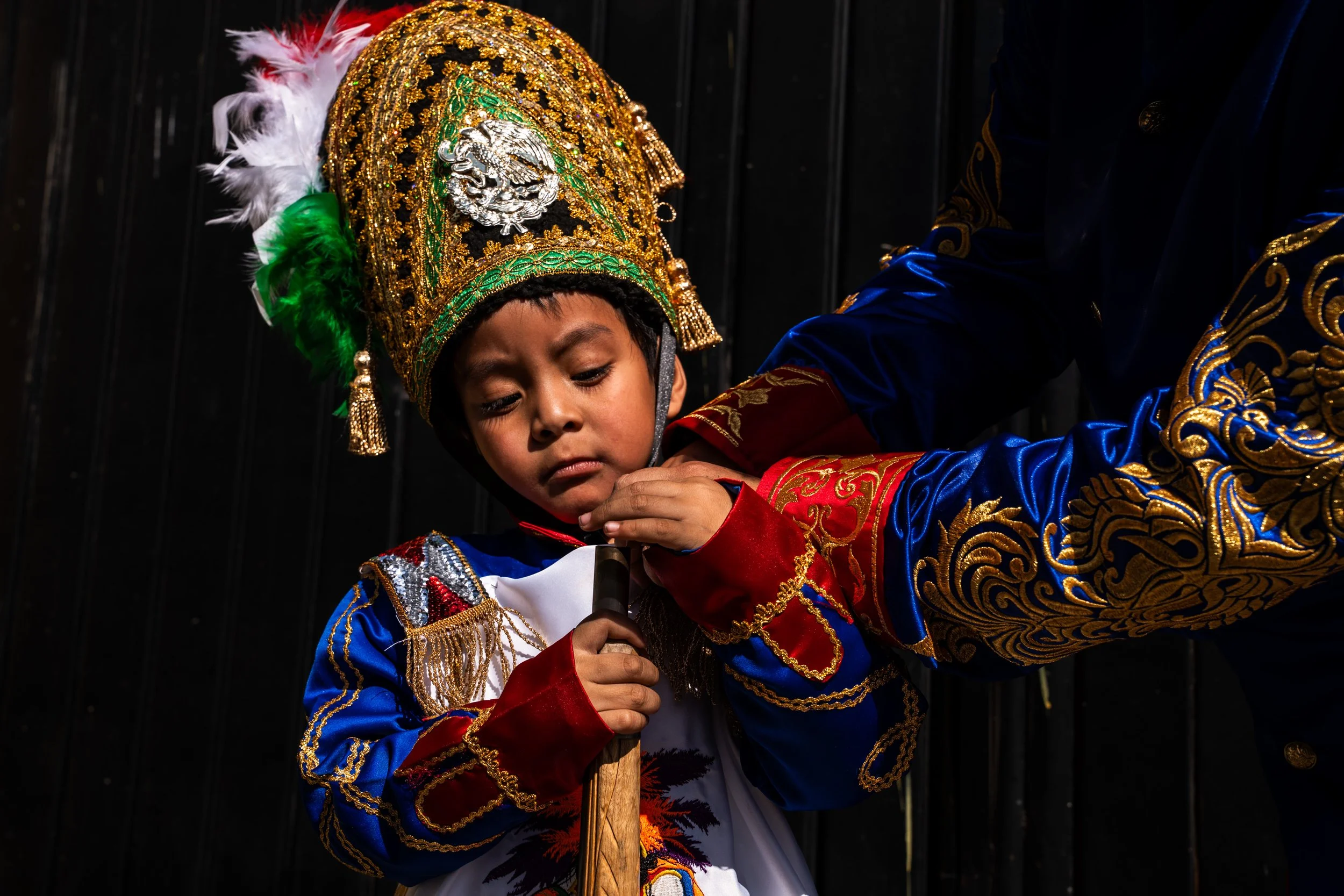
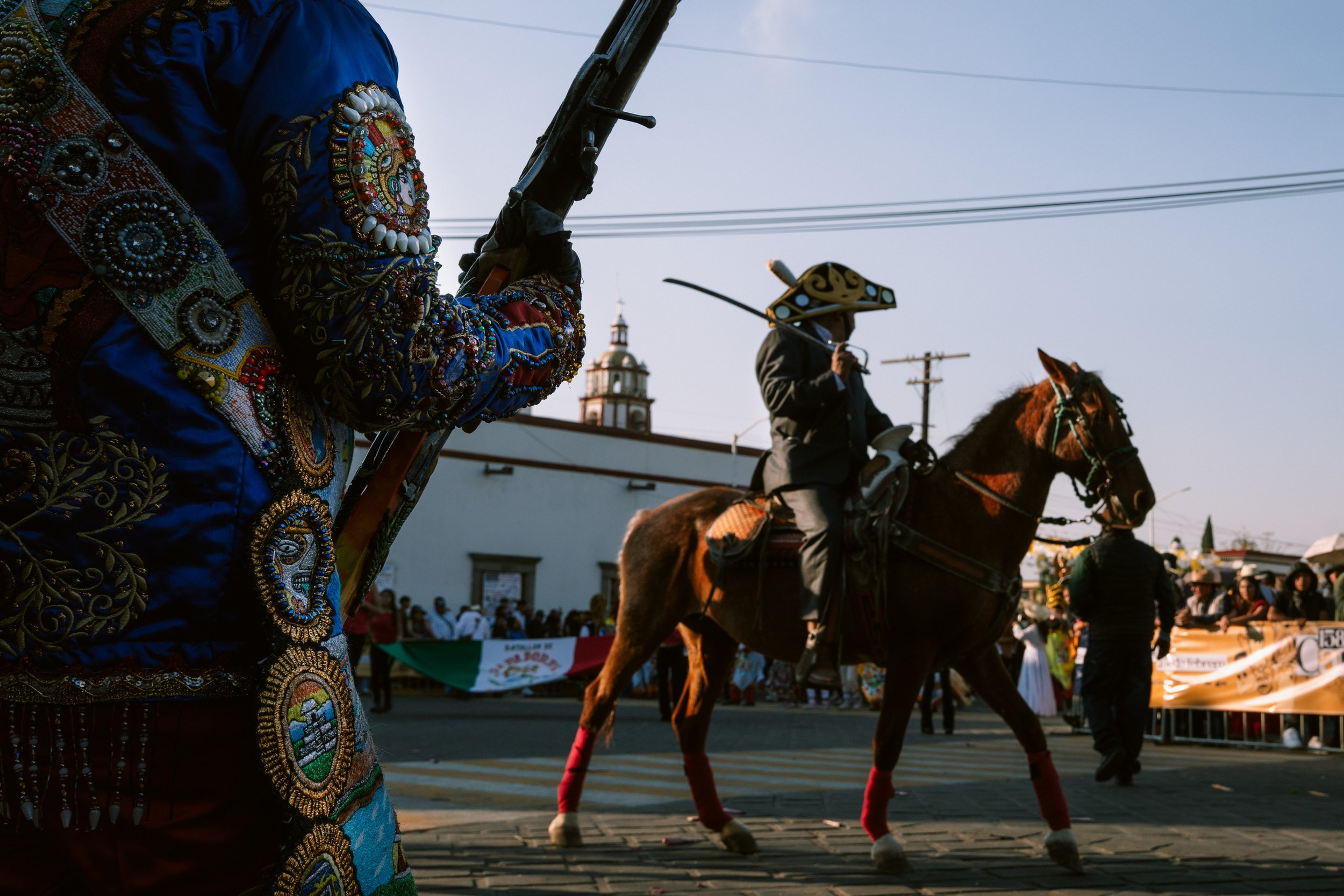
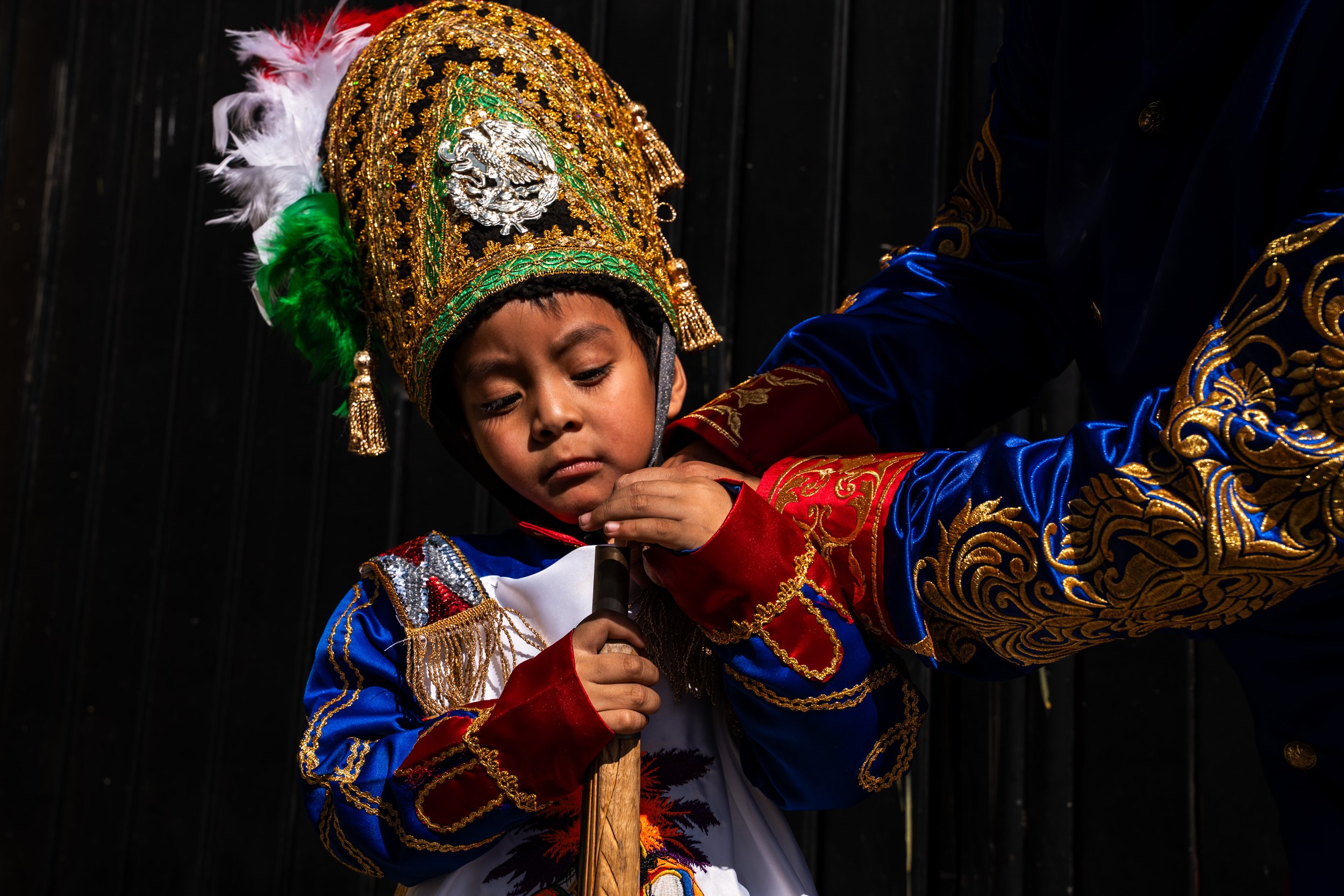
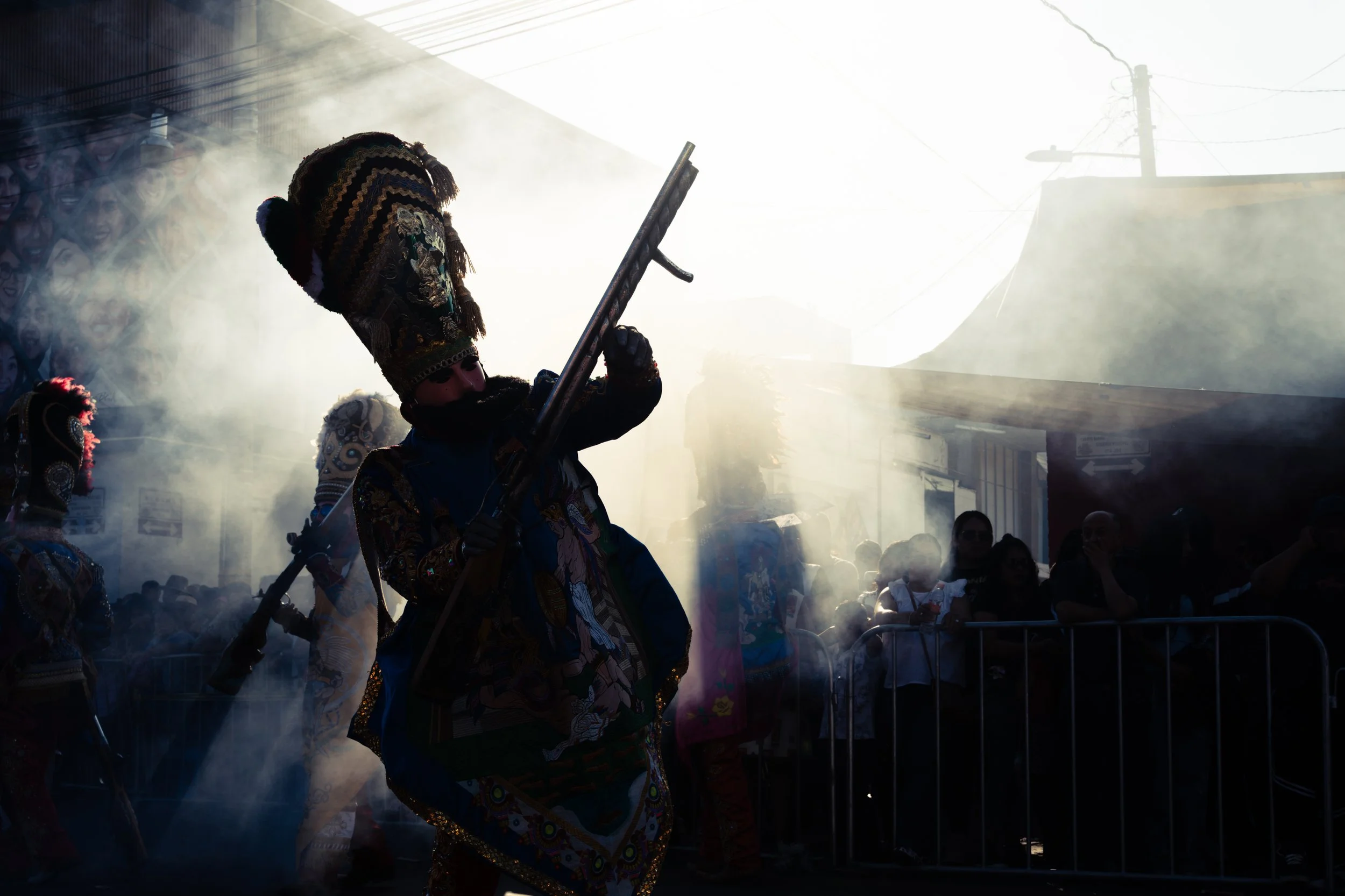
Firstly, there are the Zacapoaxtlas, recognised by their pointed yellow beards, oversized hats, and red, white, and green colours of the Mexican flag. They symbolise both Mexican resistance against the French and the Indigenous fighters of the Sierra Norte. During the main parade that punctuates each day of Carnaval, they were also among the most aggressive with their muskets. While photographing one member of the battalion firing into the air, another discharged his rifle directly beside my ear, seemingly for no reason other than to startle me. It worked.
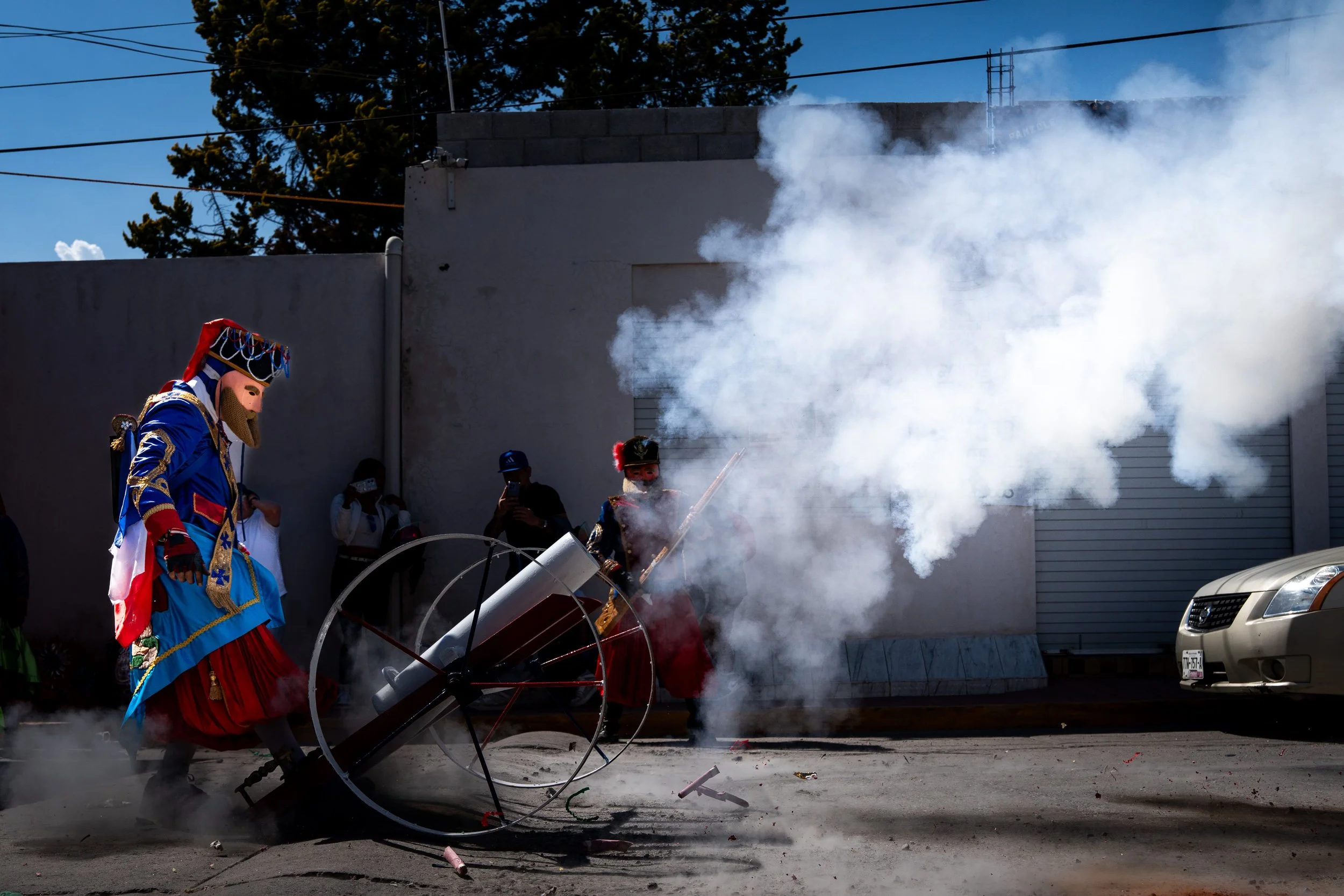
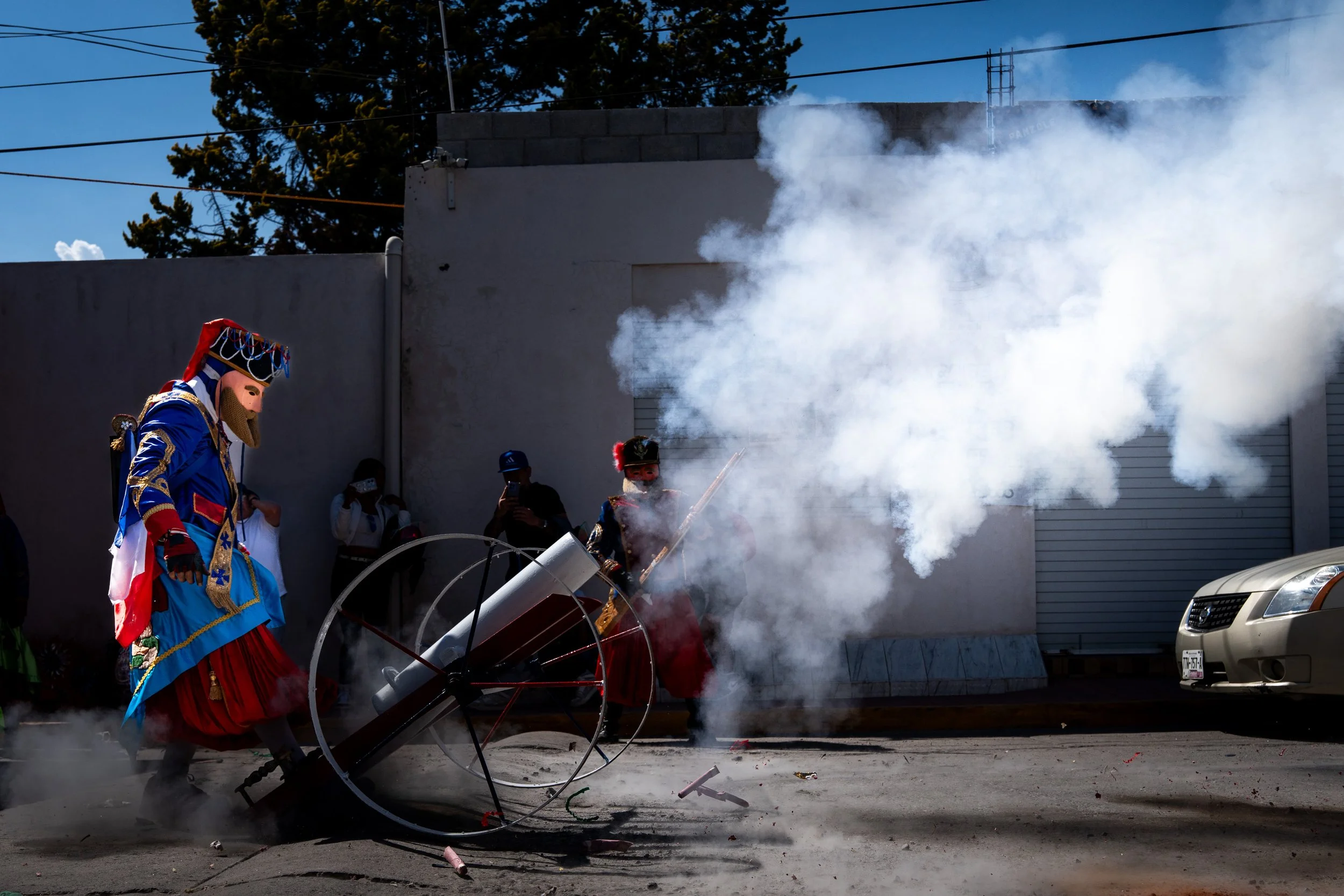
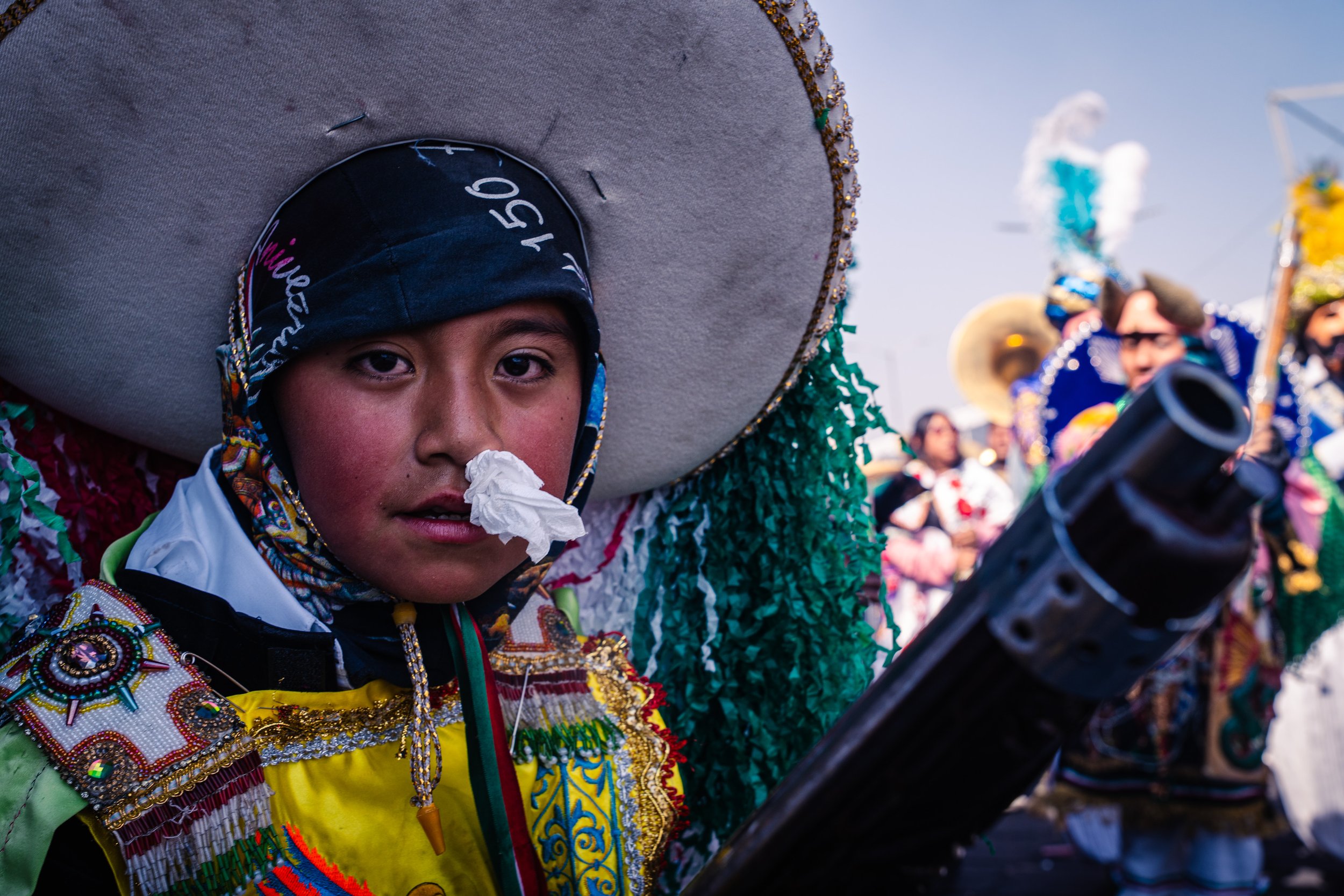
A “Zuavo” firing a canon amidst the busy streets and dancing. Shot on the Sony A7CII with the Sigma 24-70 G2
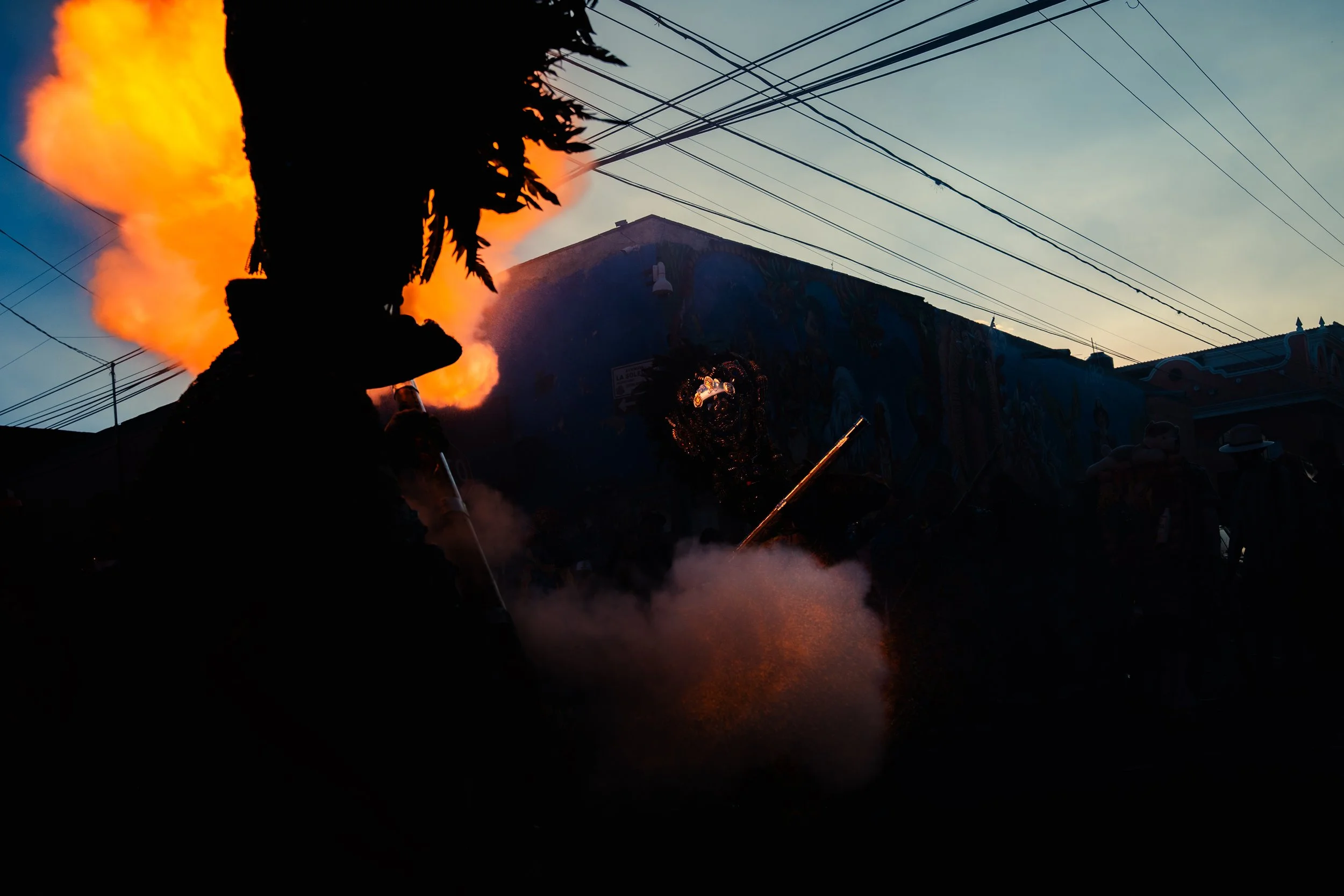
Los Zuavos represent the French soldiers themselves and are often distinguished by cartoonishly embroidered blonde facial hair and exaggerated red and blue uniforms trimmed with white. Before and after the parade, the battalions gather under large tents to drink beer and tequila, dance to live music, fire their muskets, and then drink some more. While visiting the Zuavos, after being handed several cans and a free pour of tequila tipped directly into my mouth, one of the soldiers called out, “¡Mirar!” — watch this — before wheeling a thin white cannon from a nearby garage. It was packed with gunpowder, primed, and fired straight into the air.
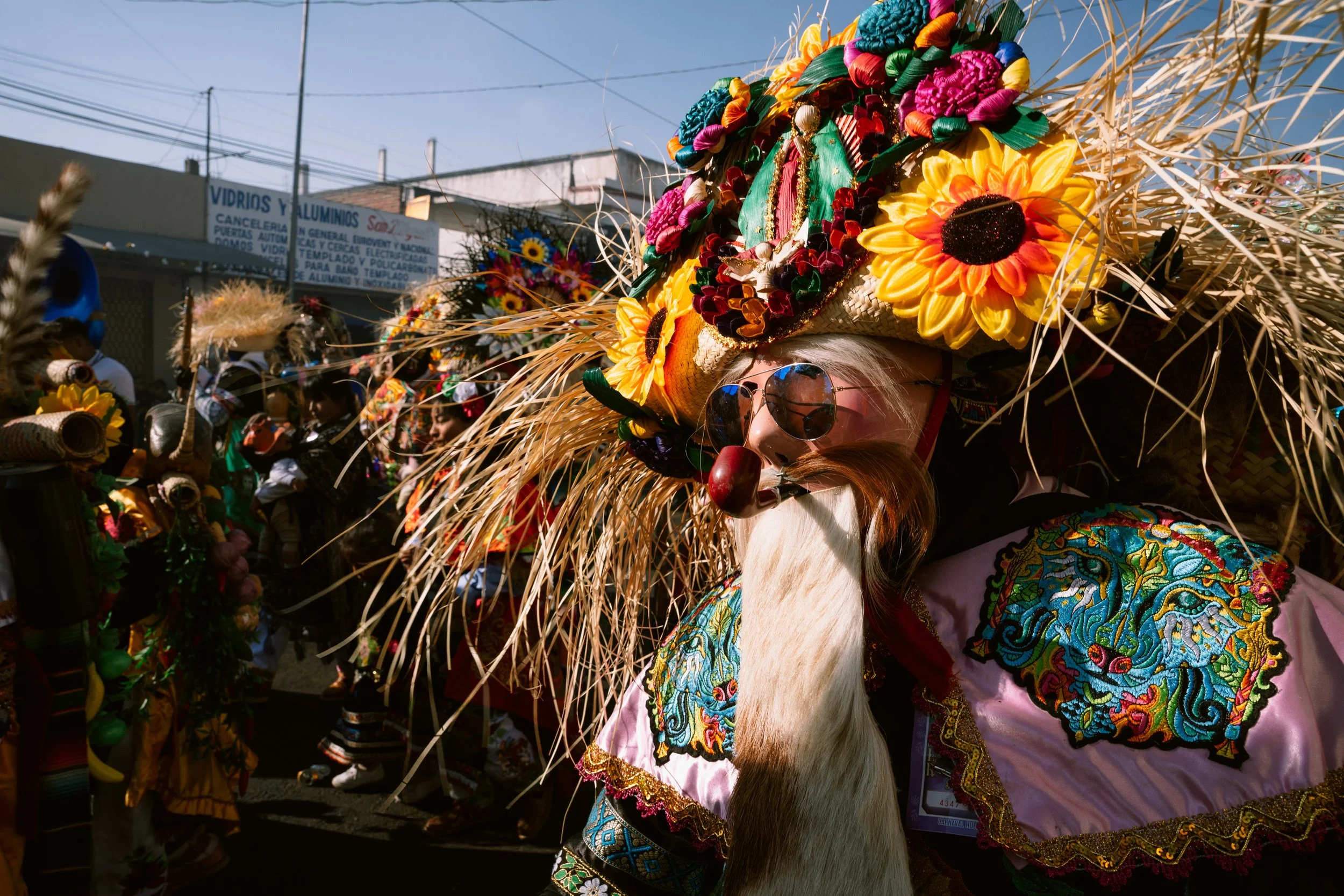
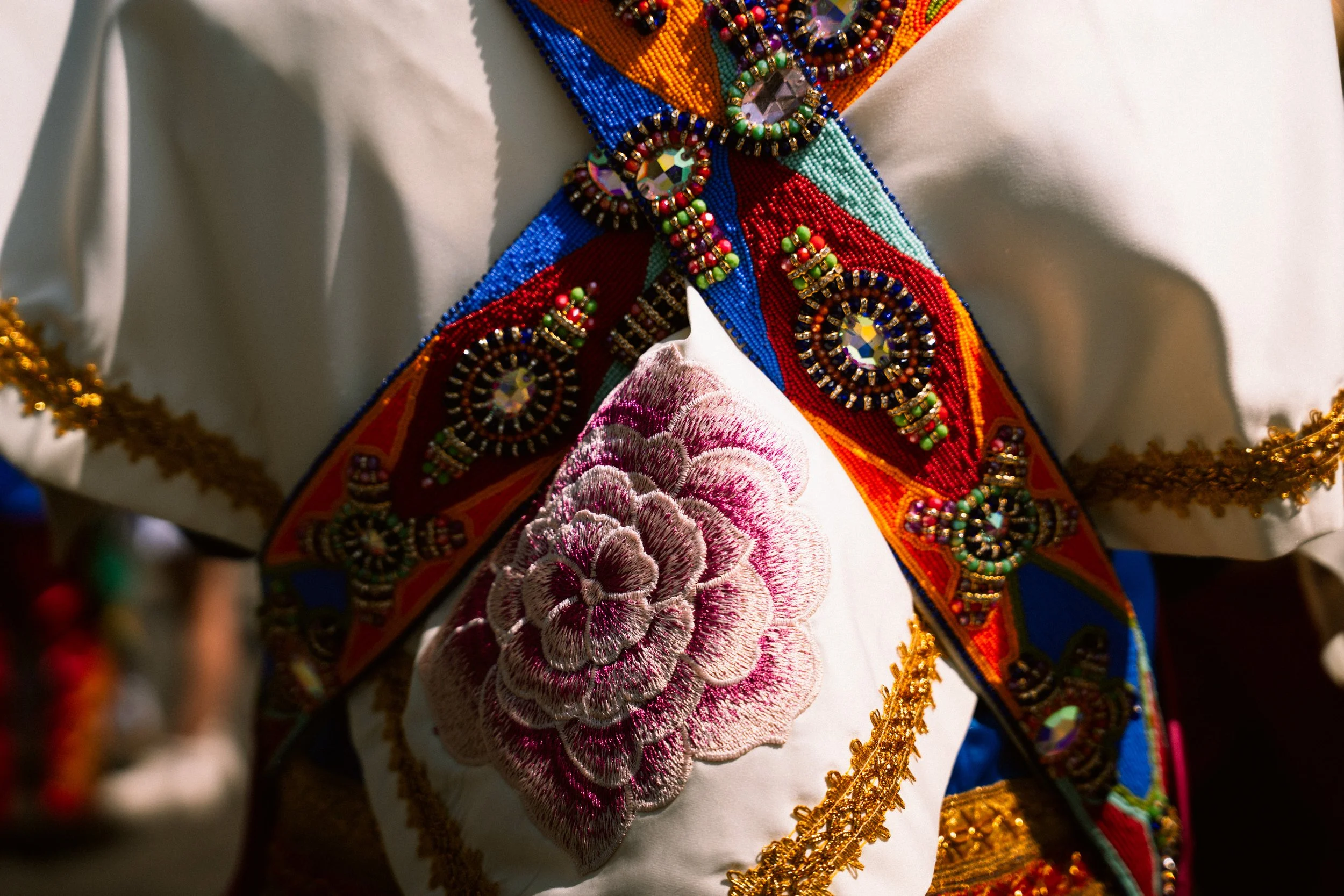
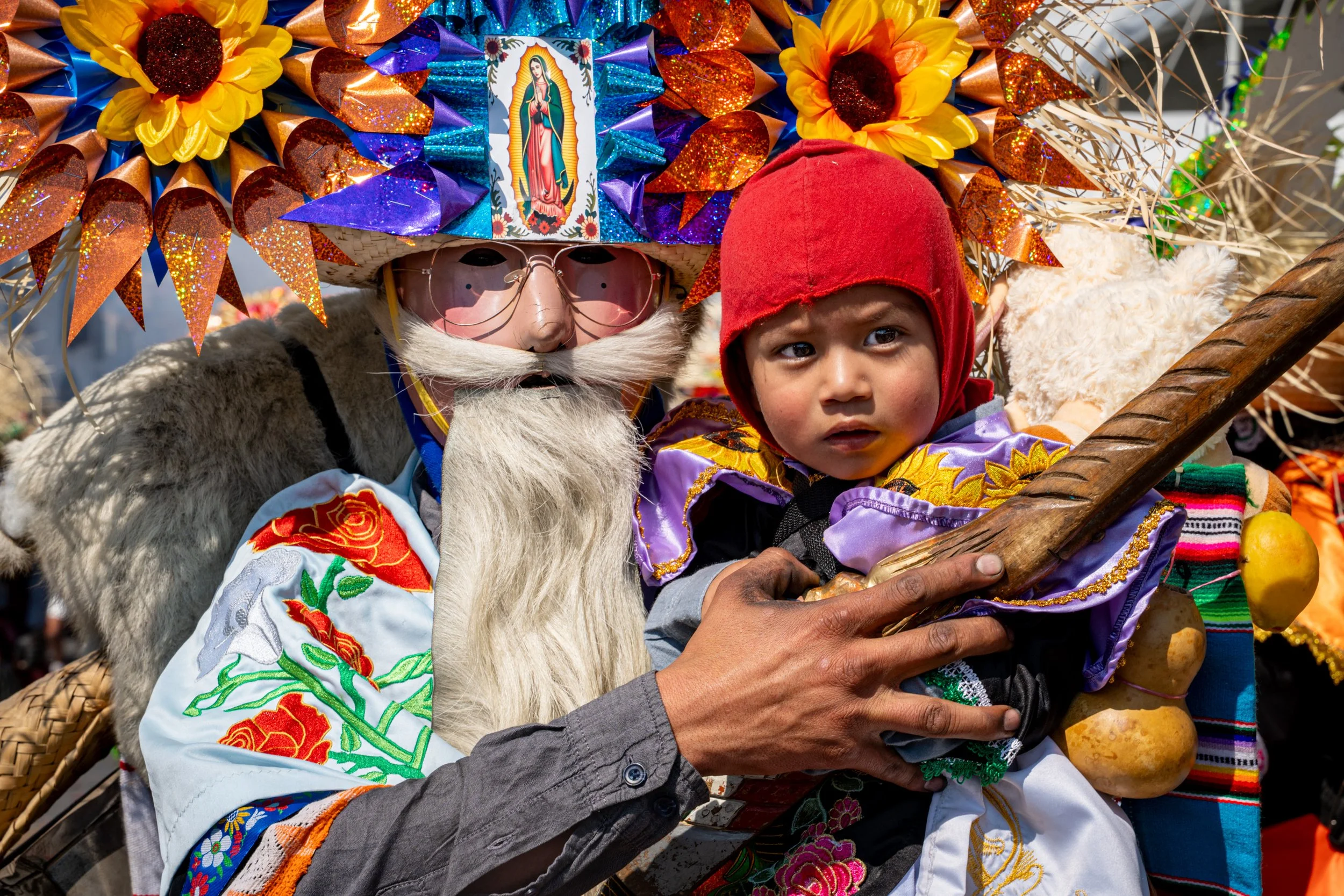
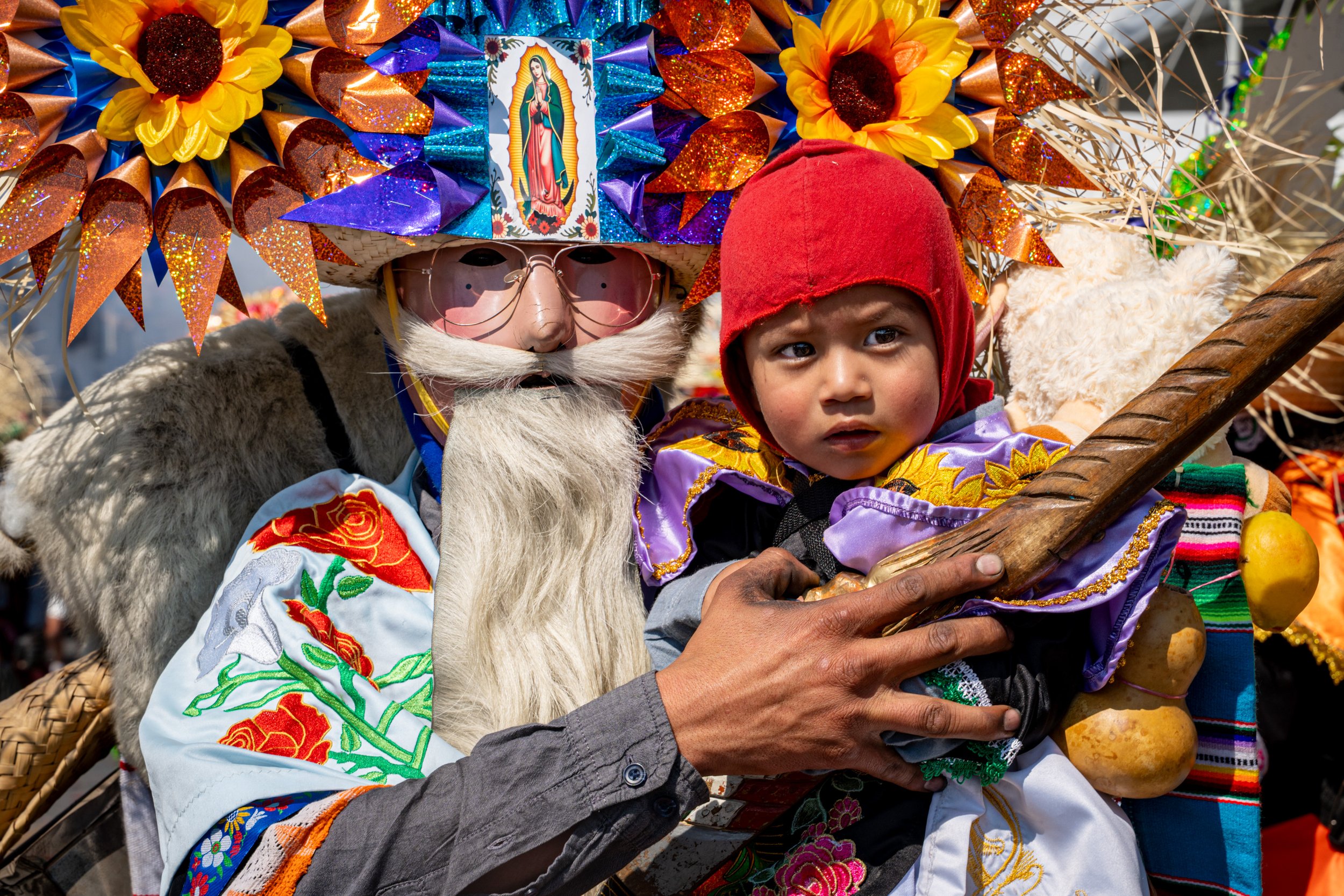
Los Serranos are the most elaborately dressed, distinguished by enormous woven hats, long white beards, and robes adorned with Indigenous imagery, including depictions of Guadalupe. More dance troupe than battalion, their presence is among the most joyous and infectious of the Carnaval. While photographing their musket fire at night, I was handed one of their oversized hats and invited to join the group, swept into the procession as it danced its way around the block.
Finally, there are the Turcos. They represent foreign or “other” fighters, dressed in Ottoman-inspired costumes with comical masks, bowl-shaped beards, pipes, and, frequently, aviator sunglasses. The name Turcos is something of a misnomer. Turks themselves never had a significant presence in Mexico; instead, the term reflects a broader colonial shorthand for outsiders, particularly Arab communities who arrived from Lebanon, Syria, and Palestine during the late Ottoman period and settled across the country, including in Puebla and Mexico City.
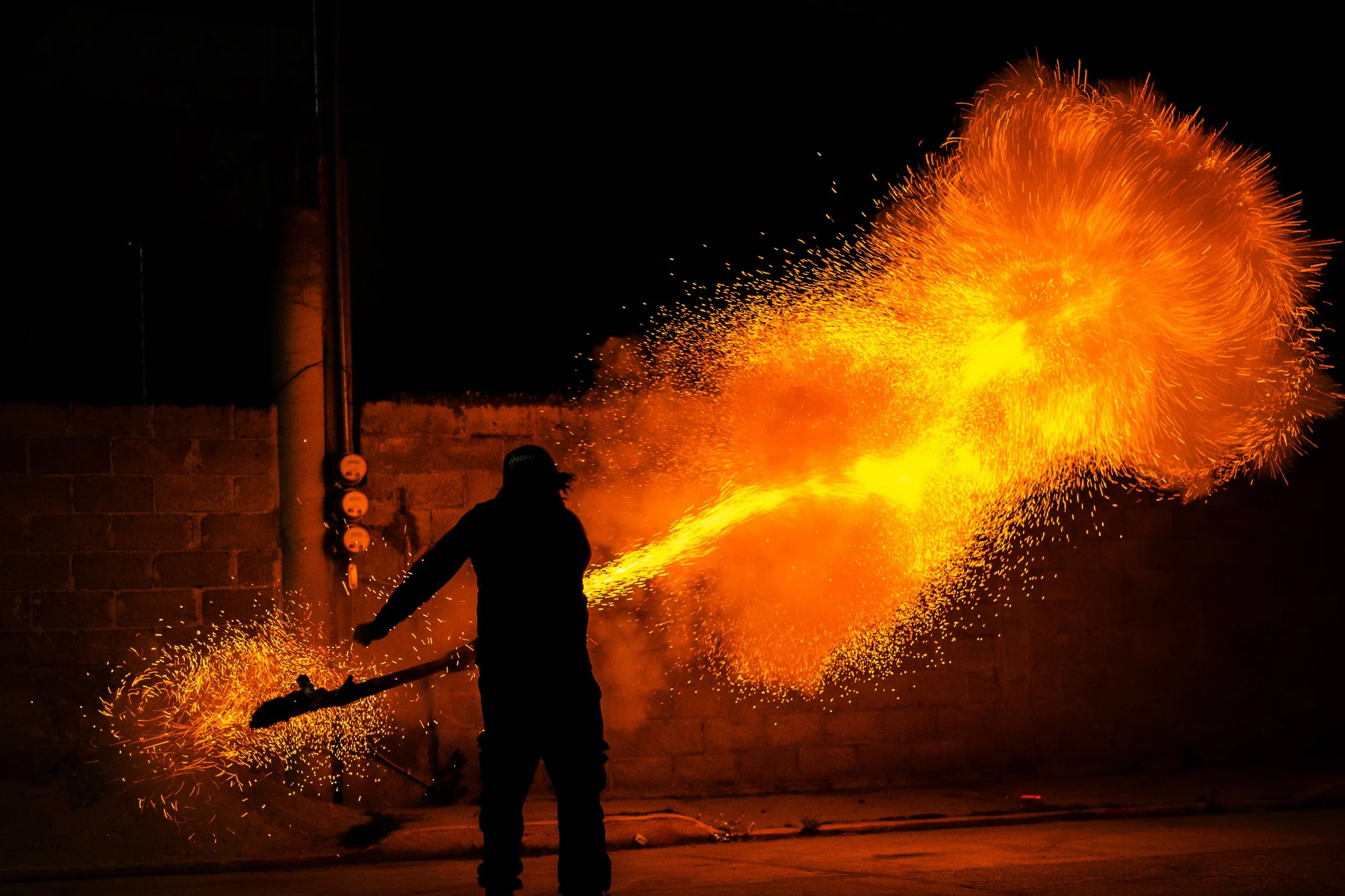
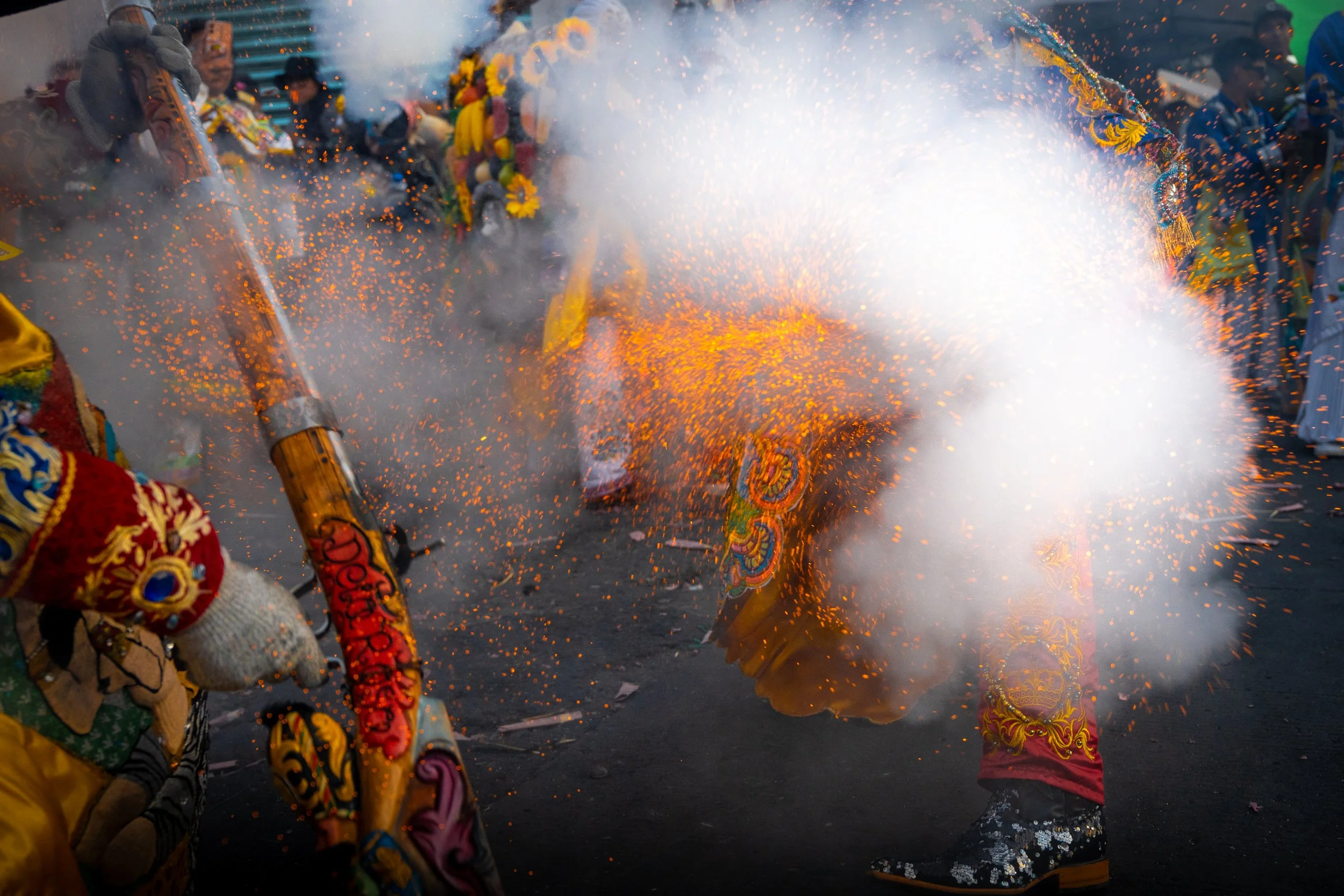
After the parade, the Turcos gather south of the main square, forming wide circles and taking turns discharging their rifles into the air in choreographed mock battle. It was here that I took some of my most visually explosive photographs, as decadently dressed figures stepped into the centre one by one, squared off against an opponent, dropped to a knee, fired, and then rose into dance.
Mexico’s Romeo & Juliet
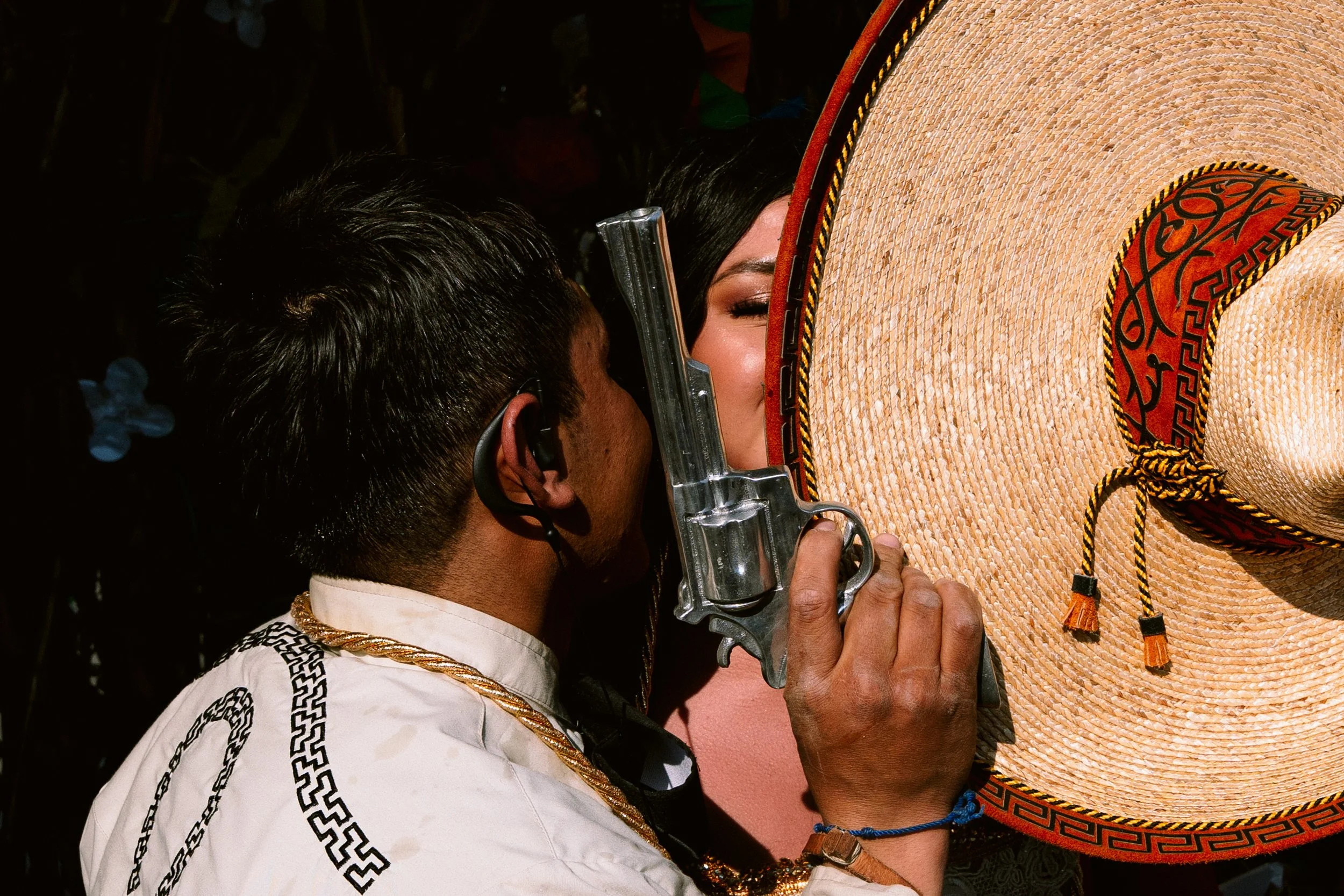
The culmination of Carnaval’s second reenactment - what local legend claims is Mexico’s first indigenous catholic wedding. Shot on the Sony A7CII with the Sigma 24-70 G2
But the carnival celebrates more than just the Battle of Puebla. Each afternoon, between roughly 1pm and 3pm, after the main parade has passed, a second reenactment unfolds, what locals claim to be Mexico’s first Indigenous Catholic wedding. Many regions across the country lay claim to this milestone, so its historical accuracy should be taken with a grain of gunpowder.
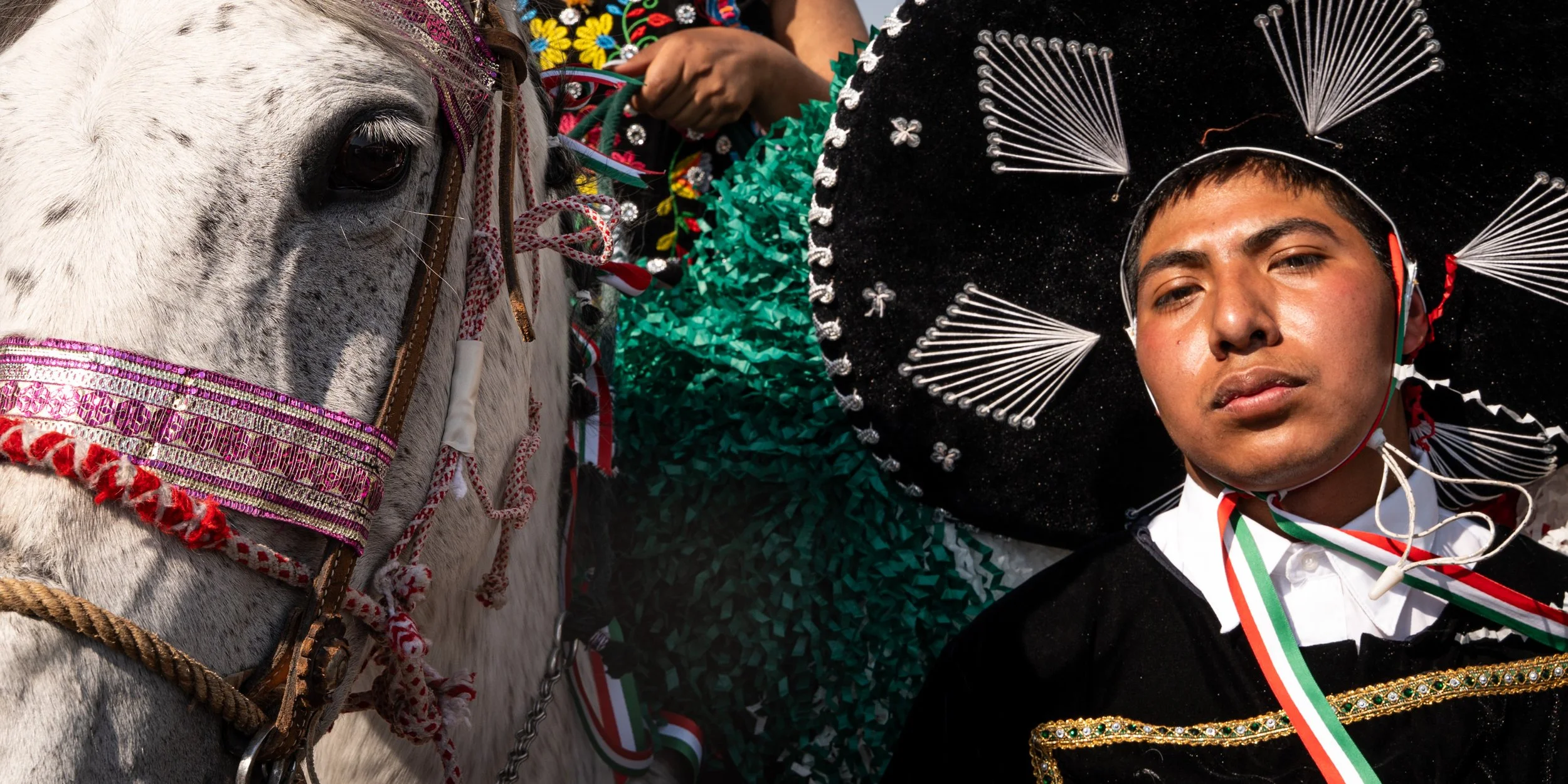
The story centres on Agustín Lorenzo, a local Indigenous bandit who climbs through the window of the Corregidor’s daughter, the child of a high-ranking judicial official of the Spanish Empire. The two fall in love, but their relationship is forbidden, divided by race, class, and colonial authority. But their love cannot be stopped and the Corregidor’s daughter agrees to flee with Agustín, the pair riding off on horseback under a volley of angry musket fire ordered by her father.
They eventually reappear in a hidden corner of the main square, where they are married by a monk wearing a rubber mask that bears an uncanny resemblance to Breaking Bad’s Walter White. The performance echoes Romeo and Juliet, symbolising the union of two opposing worlds, the Indigenous roots of Agustín Lorenzo and the Spanish authority of the Corregidor’s daughter. Though the story is largely treated as folklore today, Huejotzingo’s claim carries some historical weight. The town was among the first regions in Mexico to undergo Catholic evangelisation.
It is a relatively quiet moment that punctuates the song, dance, and musket fire of the multi-day event. One that reveals the true nature of Carnaval of Huejotzingo, the marriage of Indigenous culture and colonial history, setting aside the blood-soaked violence so often associated with the past to celebrate a moment rooted in unity.
how to get there and what to bring
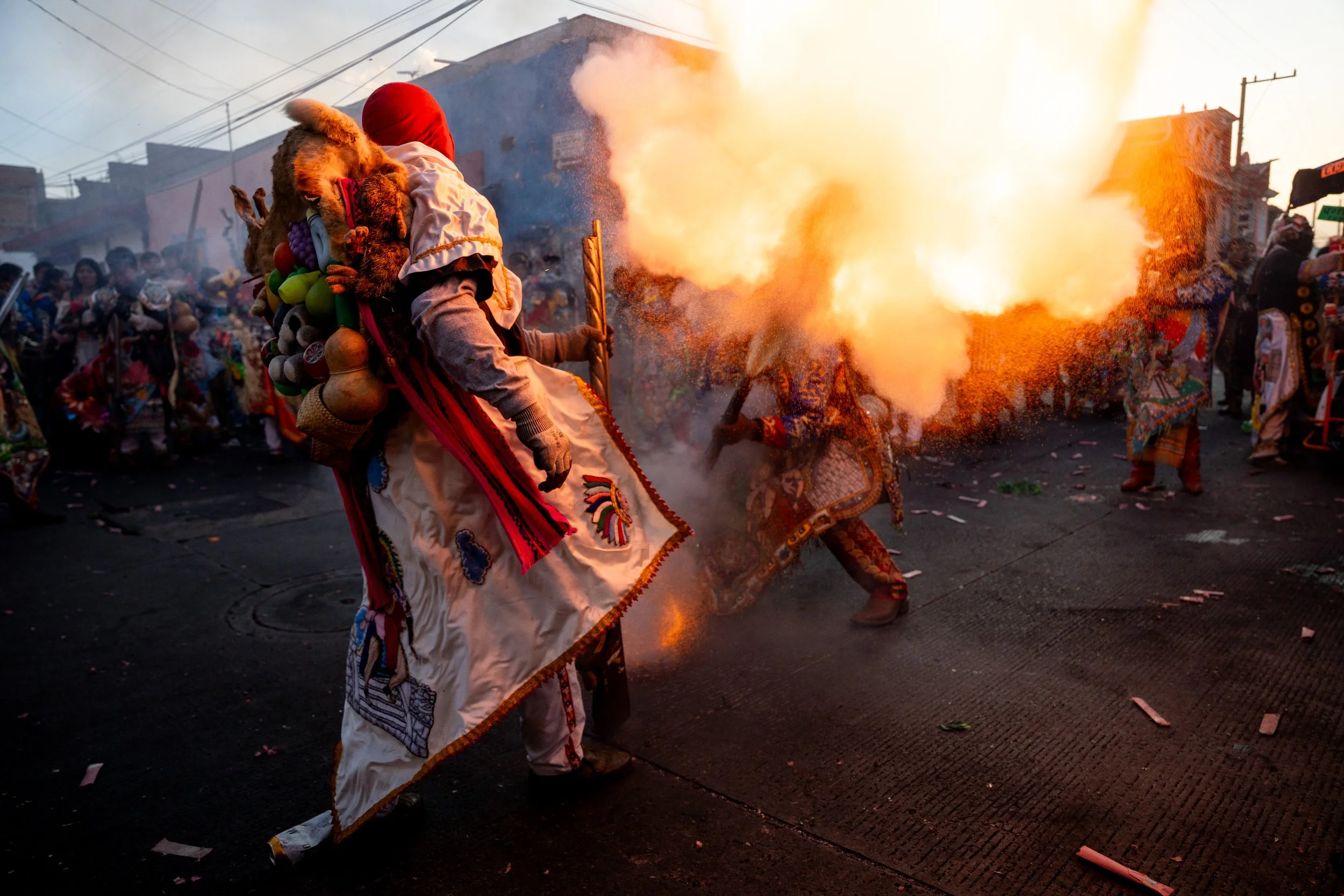
You’ll definitely want earbuds to take photos like this. Shot on the Sony A7CII with the Sigma 24-70 G2
Getting to Huejotzingo is relatively easy. Direct, intercity, buses run between Puebla and Huejotzingo several times a day, taking roughly one hour or so. However, during Carnaval, both demand and traffic tend to increase so it’s better to leave early. Alternatively, if you’re flying in for the event, Puebla airport is conveniently placed on the edge of Huejotzingo itself, with the main square being only a fifty minute walk or ten minute taxi from the airport entrance.
When you do decide to go, it’s important to pack appropriately. Ear protection is a must. While it’s possible to buy ear plugs there for just 10 pesos, I recommend bringing good quality noise cancelling earbuds - especially if you intend to get in on the action and photograph the muskets up close. Four straight days of rifle fire can really do a number on your hearing. I spent the following week at work begging people to speak up and over the sound of muffled ringing.
If you plan to bring a camera, UV filters and a lens hood are non-negotiable. Both provide an extra layer of protection for your lenses and are far cheaper to replace than a damaged front element. And, while the excellent light may make for great photos, it’s less great for your skin, and I highly recommend bringing a hat. Though, if you do forget, Sambreros are sold everywhere for as little as just 100 pesos.
the land of the willow trees
The name Huejotzingo comes from a diminutive of Huexōtl, the local Indigenous Nahuatl word for Willow. Roughly speaking, it means place of the little willow trees. Long before the musket fire, dance troupes, and battles, the town was fertile soil for crops and plant life. Now it’s the fertile soil for centuries old traditions and folklore.
Carnaval in Huejotzingo is an absolute blast, pun entirely intended, despite being oft overlooked by the global community. On my visit, I was the only gringo in sight (I understand, as an Australian, many would not consider me a gringo), to the point where many of the elaborately dressed battalions I was photographing would approach me and ask for photos of me. At one point during the parade, as I raced to capture a photo of a firing musket, the audience started to chant “Güero! Güero!” a colloquially affectionate term for someone with light skin, light hair, or European features. Many also expressed sincere gratitude for my photographing, thanking me for sharing their culture with a wider community.